Tazorac
In brief
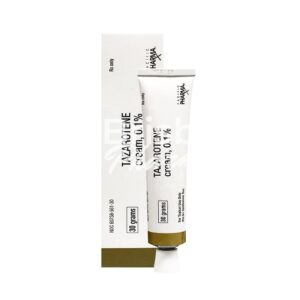
- In our pharmacy you can buy tazorac without a prescription, with delivery across Australia and discreet packaging.
- Tazorac (tazarotene) is used topically for acne and plaque psoriasis; it works by modulating gene expression in keratinocytes as a selective RAR-β and RAR-γ agonist.
- The usual dose is a thin layer applied once daily (typically in the evening) of 0.05% or 0.1% cream/gel/foam; do not treat more than about 20% of body surface area.
- The form of administration is topical — cream, gel or foam (apply to the affected skin area as directed).
- Improvement is often seen after about 4 weeks, with more noticeable benefit by 8–12 weeks.
- Duration of action: requires once-daily ongoing application for maintained benefit; therapeutic effects persist only with continued use and should be reviewed periodically by a clinician.
- Alcohol warning: there is no specific systemic alcohol prohibition, but avoid alcohol-containing skin products and excessive alcohol that can increase skin dryness and irritation.
- The most common side effect is local skin irritation — erythema, peeling, dryness, burning or stinging.
- Would you like to try tazorac without a prescription?
Basic Tazorac Information
- INN (International Nonproprietary Name): Tazarotene
- Brand Names Available In Australia: Internationally known brands include Tazorac (cream and gel 0.05% and 0.1%), Fabior (foam 0.1%), Avage (cream 0.1%) and Zorac (gel 0.05% and 0.1%).
- ATC Code: D10AD05
- Forms & Dosages: Cream 0.05% and 0.1%, Gel 0.05% and 0.1%, Foam 0.1% (Fabior); typical pack sizes range from 15 g to 60 g for tubes and 50 g for foam cans.
- Manufacturers In Australia: Not specified; global manufacturers include Bausch Health (formerly Allergan) in the USA, Roche and various generics in the EU, and licensed local suppliers in some markets.
- Registration Status In Australia: Not specified; check the Australian Register of Therapeutic Goods (ARTG) for current entries.
- OTC / Rx Classification: Prescription (Rx) only.
High-Risk Groups (Elderly, Pregnancy, Chronic Illness)
What worries patients most is pregnancy safety and whether they or an older relative can use tazarotene safely.
Tazarotene is contraindicated in pregnancy due to teratogenic risk and is treated as a category X medicine in many product labels.
Do not use tazarotene during pregnancy or if you may become pregnant while using it.
Advise women of childbearing potential to use effective contraception before and during treatment and to have pregnancy testing where clinically appropriate.
Anyone with a known hypersensitivity to tazarotene or formulation excipients must not use the product.
Elderly patients and people with fragile or eczematous skin may experience increased local irritation and should start on a reduced frequency or lower-strength product.
For patients with severe hepatic or renal disease, note that systemic exposure from topical tazarotene is minimal but data are limited, so monitor closely and consider specialist input.
Limit the maximum treated area to approximately 20% body surface area to reduce risk of irritation and excessive absorption.
- Pregnancy Safety Checklist:
- Confirm pregnancy status before starting therapy.
- Advise effective contraception for women of childbearing potential.
- Arrange pregnancy testing where clinically appropriate.
- Stop treatment immediately if pregnancy is suspected and seek medical review.
- Absolute Contraindications:
- Pregnancy.
- Known hypersensitivity to tazarotene or any excipient.
- Relative Cautions:
- Breastfeeding — avoid chest application and discuss risk/benefit.
- Severe eczema or highly sensitive skin — use with caution.
- Severe hepatic or renal impairment — monitor closely as systemic data are limited.
| High-Risk Group | Monitoring Action | Frequency |
|---|---|---|
| Women Of Childbearing Potential | Confirm contraception, consider pregnancy test if indicated | Before starting and during therapy as needed |
| Elderly Or Frail Skin | Assess skin condition, start on lower frequency, review irritation | Weekly for first 2–4 weeks, then as required |
| Severe Hepatic/Renal Disease | Clinical review for unexpected systemic symptoms | Baseline and on clinical concern |
| Breastfeeding Mothers | Avoid application to breasts; discuss alternatives | Before starting and during therapy |
Interaction With Activities (Driving, Workplace Safety)
A common question is whether topical tazarotene affects driving or work tasks.
Topical tazarotene does not cause sedation or cognitive impairment and therefore does not normally impair driving or use of machinery.
If significant facial irritation, stinging, visual discomfort, dizziness or photophobia develops, avoid driving or performing safety-critical tasks until symptoms resolve.
Outdoor workers should use protective clothing and a broad-spectrum sunscreen daily because topical retinoids increase photosensitivity.
Q&A — Can I Drive After Taking It In Australia?
Short answer: topical tazarotene does not cause sedation or cognitive impairment so it does not impair driving.
However, if you develop significant facial irritation, visual stinging, dizziness or photophobia, do not drive.
Seek pharmacist or doctor advice if symptoms affect concentration or visual comfort.
INN, Brand Names Available In Australia
Patients ask what tazorac actually is and which brands exist in the market.
The international nonproprietary name is tazarotene.
Common international brand names include Tazorac (cream and gel, 0.05% and 0.1%), Fabior (foam 0.1%), Avage (cream 0.1%) and Zorac (gel 0.05% and 0.1%).
Brand availability in Australia may differ and some products may be supplied as generics or via import.
Always check the Australian Register of Therapeutic Goods (ARTG) for current listings before advising patients on a specific product.
Legal Classification (TGA-Approved, PBS-Listed)
Tazarotene is classified under ATC code D10AD05 as a topical retinoid for dermatological use.
It is prescription-only in most jurisdictions and is generally an Rx-only dermatological (ATC D10AD05).
TGA registration status and PBS subsidy vary between products and over time, so pharmacists should confirm ARTG entries and PBS scheduling before advising on cost or subsidy.
- Brand → Formulation Mapping:
- Tazorac — cream and gel, 0.05% and 0.1%.
- Fabior — foam, 0.1%.
- Avage — cream, 0.1% (photoageing in some markets).
- Zorac — gel, 0.05% and 0.1%.
| Formulation | Concentration | Brand |
|---|---|---|
| Cream | 0.05%, 0.1% | Tazorac, Avage |
| Gel | 0.05%, 0.1% | Tazorac, Zorac |
| Foam | 0.1% | Fabior |
Standard Regimens (PBS Reference Dosing)
People want a simple, practical dosing guide for everyday use.
For acne vulgaris, apply a thin layer of tazarotene cream or gel once daily in the evening to affected areas.
Acne treatment is indicated for adolescents aged 12 years and older when prescribed.
For plaque psoriasis, apply 0.05% or 0.1% cream or gel once daily to lesions in adults aged 17 years and older, according to product labelling.
Fabior foam 0.1% should be shaken well and applied as a thin layer once daily.
Do not exceed treatment of more than about 20% body surface area to limit irritation.
Expect to see initial improvement around four weeks, with maximal benefit often by eight to twelve weeks.
Adjustments For Comorbidities
No formal dose adjustments exist for renal or hepatic impairment because systemic exposure is minimal with topical use.
For frail patients or those with sensitive skin, consider reducing application frequency (e.g., alternate nights) or using a lower-strength formulation.
Pause treatment for severe irritation and arrange pharmacist or prescriber review before restarting.
Q&A — What If I Miss A Dose?
If you miss an evening dose, apply when you remember unless it is close to the next scheduled dose.
Do not double up to make up for a missed application.
If irritation is ongoing, pause application and seek pharmacist or doctor review.
| Indication | Formulation | Typical Regimen |
|---|---|---|
| Acne | Cream/Gel 0.05% or 0.1% | Thin layer once daily in evening; ≥12 years |
| Plaque Psoriasis | Cream/Gel 0.05% or 0.1% | Apply once daily to lesions; adults ≥17 years |
| Acne (Foam) | Foam 0.1% (Fabior) | Shake well and apply once daily |
- When To Slow Or Stop Therapy:
- Severe or worsening irritation, blistering or oedema.
- Signs of secondary infection at treated sites.
- Pregnancy or pregnancy suspicion.
Food And Drinks (Alcohol, Coffee, Australian Diet Context)
Patients often ask whether diet or alcohol affects topical tazarotene.
Topical tazarotene has minimal systemic absorption so interactions with food and drink are not clinically relevant.
Alcohol does not change the topical effect of tazarotene but excessive alcohol use can worsen skin dryness and delay healing.
No dietary restrictions are required while using tazarotene.
Common Drug Conflicts
A key counselling point is avoiding cumulative irritation from other topical products.
Do not use tazarotene concurrently with other strong topical irritants such as abrasive cleansers, astringents, and chemical peels containing salicylic acid without prescriber advice.
Use caution when combining with benzoyl peroxide as dryness and irritation may increase.
Avoid combining tazarotene with other topical retinoids or systemic retinoids without specialist direction because of additive mucocutaneous effects.
Potent topical corticosteroids may alter lesion appearance and should be used under guidance for psoriasis management.
| Interacting Topical Agent | Risk | Recommended Action |
|---|---|---|
| Adabrasive Cleansers / Astringents | Increased irritation | Avoid or use gentler cleanser; space applications |
| Benzoyl Peroxide | Increased dryness and irritation | Introduce slowly, use moisturiser, monitor |
| Other Topical Retinoids | Cumulative irritation | Avoid concurrent use unless advised by prescriber |
| Systemic Retinoids | Additive mucocutaneous effects | Do not combine without specialist advice |
- Do’s And Don’ts For Skincare:
- Do use a gentle, non-abrasive cleanser and a simple moisturiser.
- Do use sunscreen and protective clothing daily.
- Don’t use harsh peels or waxing on treated areas while irritated.
- Don’t apply to mucous membranes or open wounds.
User Reports & Trends (Australian Patient Feedback)
What are Australians saying online about tazarotene and tazorac?
Common themes from Australian reviews and forums include an initial period of irritation with erythema, peeling and dryness, followed by visible improvement after four to twelve weeks for many users.
Many patients value pharmacist counselling on moisturiser use and sunscreen, and some report cost sensitivity and interest in generic options.
Rural patients sometimes report longer wait times or access delays for specific brands or imports.
Anecdotally, co‑use of moisturiser and diligent sunscreen is frequently recommended by peers to manage tolerability.
- Typical Patient Experiences:
- Initial redness and peeling that peaks in the first 2–4 weeks.
- Noticeable reduction in comedones and plaque thickness by 8–12 weeks.
- Some stop early due to irritation and restart with alternate-night use.
- Requests for pharmacist advice on moisturisers and sunscreen are common.
- Counselling Checklist From Reviews:
- Set expectations for a 4–12 week timeline to see results.
- Explain common irritation and simple management strategies.
- Advise when to seek prescriber review for severe reactions.
Practical note: balance online reviews with clinical evidence and always perform a clinical assessment before changing therapy.
National Chains (Chemist Warehouse, Priceline, TerryWhite)
Most community pharmacies in Australia can dispense tazarotene where stocked or can order it in for a patient.
Large chains such as Chemist Warehouse, Priceline and TerryWhite Chemmart often list topical retinoids and can advise on availability and generic alternatives.
Pricing and stock levels will vary between stores and over time.
Online Pharmacies And Telehealth E-Prescriptions
E-prescriptions and telehealth consults are commonly used in Australia to obtain a tazarotene prescription and have scripts filled by accredited online pharmacies.
For rural and remote areas allow extra shipping time and confirm that topical tazarotene does not require cold-chain handling during postage.
In our online pharmacy, tazorac is available without a prescription, with discreet delivery to Australia in 9-21 days.
- Purchasing Checklist:
- Ask if the product is ARTG-listed for Australia.
- Check brand versus generic availability and expected delivery time.
- Confirm PBS subsidy eligibility before advising on cost.
| Purchase Route | Pros | Cons |
|---|---|---|
| In-Store Community Pharmacy | Immediate advice, ability to view stock | Stock may be limited; price varies |
| Online Pharmacy | Convenience, discreet delivery, telehealth scripts accepted | Delivery time, ensure ARTG listing and reputable supplier |
| Telehealth Clinic | Remote prescriber access, e-prescription issuance | May require cost for consult; prescription still needed |
Simplified Explanation
Many patients want a plain-English summary of how tazarotene works.
Tazarotene is a topical retinoid that selectively activates retinoic acid receptors RAR‑β and RAR‑γ in the skin.
Activation of these receptors changes gene expression in keratinocytes to normalise cell differentiation and reduce hyperkeratosis.
In acne this action reduces comedone formation and inflammation, and in psoriasis it helps to reduce scaling and plaque thickness.
Clinical Terms
Percutaneous absorption of tazarotene is low and systemic exposure is limited with topical use.
Because retinoids affect the epidermis, local irritation such as stinging, redness and peeling is common, especially early in treatment.
Therapeutic effects typically become evident over several weeks as the skin renews.
- Definitions:
- RAR‑β / RAR‑γ: Retinoic acid receptor subtypes targeted by tazarotene.
- Percutaneous Absorption: How much drug passes through the skin into circulation.
- BSA: Body Surface Area, used to limit treated skin to ~20%.
- Expected Biological Effects:
- Normalisation of keratinocyte differentiation.
- Reduction in comedone formation.
- Thinning and softening of psoriatic plaques over time.
Approved Indications By TGA (And International Context)
International product labels commonly approve tazarotene for acne vulgaris and plaque psoriasis.
In the US and EU, tazarotene products carry indications for acne and psoriasis in specific strengths and formulations.
Australian local indications depend on ARTG registration for each brand and formulation, so verify local labelling.
Off-Label Uses In Australian Clinical Practice
Off-label uses reported internationally include photoageing, where Avage 0.1% cream has been used for photoageing in some markets.
Other off-label uses may include certain hyperkeratotic disorders, but use should be guided by a dermatologist and local regulations.
Avoid use on mucous membranes and in pregnancy.
- Approved Uses vs Common Off-Label Uses:
- Approved: Acne vulgaris, plaque psoriasis (international labels).
- Off-Label: Photoageing, selected hyperkeratotic conditions under specialist guidance.
| Indication | Typical Formulation |
|---|---|
| Acne | Gel/Cream 0.05% or 0.1% |
| Plaque Psoriasis | Cream/Gel 0.05% or 0.1% |
| Photoageing (Off-Label) | Cream 0.1% (Avage in some markets) |
Key Clinical Findings (Efficacy & Timeline)
Clinical programmes and product literature report that acne improvement often begins around four weeks.
Maximal benefit for acne is commonly seen at eight to twelve weeks of consistent use.
For psoriasis, plaque thinning and reduced scaling may take several weeks and ongoing treatment or maintenance may be necessary under clinical supervision.
Early irritation typically peaks in the first two to four weeks and then reduces with continued use.
| Outcome | Typical Time To Effect | Side-Effect Timeline |
|---|---|---|
| Reduction In Comedones (Acne) | ≈4 weeks | Irritation peaks 2–4 weeks |
| Maximal Acne Benefit | 8–12 weeks | Irritation then often subsides |
| Psoriasis Plaque Reduction | Several weeks | Local irritation may occur early |
- Monitoring Checkpoints:
- 2 Weeks: Assess tolerance and review moisturiser use.
- 6–8 Weeks: Evaluate clinical response and adherence.
- 12 Weeks: Review for maximal effect or need to change therapy.
PBS-Listed Alternatives Comparison Table
When tazarotene is unsuitable, consider alternatives based on indication, tolerance and subsidy status.
| Drug | Indication | Typical Concentration | PBS Subsidy Status | Pros / Cons |
|---|---|---|---|---|
| Adapalene (Differin) | Acne | 0.1% (OTC) / 0.3% (Rx) | Varies | Often better tolerated; available OTC in some products |
| Tretinoin (Retin-A) | Acne / Photoageing | 0.01%–0.1% | Prescription only | Well‑established efficacy; may irritate |
| Topical Corticosteroids | Psoriasis | Various | PBS-listed formulations exist | First-line for flares; not for long-term monotherapy |
| Calcipotriol | Psoriasis | 0.005% | Often PBS-subsidised | Good for plaque control; used in combination with steroids |
- Pros / Cons Checklist For Selecting An Alternative:
- Tolerability vs efficacy trade-off.
- Cost and PBS subsidy availability.
- Pregnancy safety (adapalene and tretinoin also contraindicated in pregnancy).
Common Questions From Australian Pharmacy Consultations
Pharmacists hear the same five or six questions regularly.
“Is it safe in pregnancy?” — No; tazarotene is contraindicated in pregnancy.
“Can I breastfeed?” — Discuss risks and benefits with the prescriber and avoid chest application.
“How long until I see results?” — Typically four to twelve weeks.
“Can I use moisturisers and sunscreens?” — Yes; moisturisers reduce irritation and sunscreen is mandatory due to photosensitivity.
“What if my skin peels?” — Reduce frequency or pause use and seek pharmacist or doctor review.
- Quick Triage Checklist — Red Flags:
- Severe blistering or widespread exfoliation.
- Facial swelling or respiratory symptoms suggesting allergy.
- Systemic symptoms such as fever with skin changes.
Comparison Table — Pharmacy Source, Typical Price Range, PBS Subsidy Status
Price and access are important to patients, particularly those paying privately.
| Source | Typical Wait Time | Likely Price Band | PBS Subsidy Possible? |
|---|---|---|---|
| Community Pharmacy (In-Store) | Same day or 1–3 days | Moderate | Depends on ARTG/PBS listing |
| Large Chain Online | 3–7 days (metro) | Competitive | Depends on product |
| Telehealth + Online Dispense | 5–14 days | Varies | Depends on prescribing and ARTG |
- Patient Checklist For Cost-Sensitive Buyers:
- Ask the pharmacist about generic alternatives and promotions.
- Consider asking the prescriber about PBS-listed alternatives.
- Check major chains for seasonal discounts or voucher codes.
TGA Approval
Confirm current Australian registration via the ARTG before advising on specific brands and indications.
Tazarotene is a recognised topical retinoid internationally but local brand approvals and formulations vary.
It is prescription-only in most jurisdictions and listed under ATC D10AD05.
PBS Subsidy Details
PBS listings change over time and tazarotene products may not always be PBS-subsidised.
Pharmacists and prescribers should verify the PBS Schedule or local formulary before prescribing to estimate patient co-payments.
- Definitions:
- ARTG: Australian Register of Therapeutic Goods.
- PBS: Pharmaceutical Benefits Scheme.
- Prescriber Checklist:
- Confirm ARTG entry for the intended product.
- Check PBS status before prescribing for cost-sensitive patients.
- Document rationale for off‑label use if applicable.
Household Storage In Australian Climate (Heat/Humidity)
Australian summers can be hot, so storage advice matters.
Store tazarotene between 20–25°C where possible and protect it from excessive heat and direct sunlight.
Do not freeze the product.
Advise patients to keep the tube or can in a cool, shaded cupboard away from windows and ovens.
Replace caps securely and keep out of reach of children.
Cold-Chain Handling For Pharmacies
Tazarotene does not require refrigeration and does not need cold-chain transport for standard formulations.
Pharmacies should store stock at controlled room temperature and rotate by expiry.
Include storage instructions on patient leaflets, particularly for hot summers or postal transport.
- Patient Storage Steps:
- Store in a cool, shaded place between 20–25°C.
- Avoid leaving tubes in cars or in direct sunlight.
- Discard after expiry and keep out of reach of children.
| Storage Condition | Temperature / Action |
|---|---|
| Recommended | 20–25°C; keep in shade |
| Avoid | Freezing or excessive heat; direct sunlight |
Australian Pharmacist Counselling Style
Patients appreciate a short, structured counselling approach from pharmacists.
Confirm the indication and pregnancy status before providing advice.
Explain that tazarotene is applied once daily in the evening as a thin layer to affected areas.
Recommend using a moisturiser to help manage dryness and to apply sunscreen and protective clothing during the day because of photosensitivity.
Set expectations that results may be seen from four weeks and more obvious by eight to twelve weeks.
Advise that treated area should normally be limited to around 20% BSA and to stop treatment and seek review for severe blistering, swelling or extreme irritation.
Patient Advice From PBS And National Health Authorities
Provide written product information and encourage patients to check ARTG details where relevant.
Advise patients to report serious adverse effects to the TGA adverse event reporting system.
Use an ointment chart or simple written handout for dosing, precautions and contact details.
- Counselling Steps Checklist:
- Confirm no pregnancy and discuss contraception if applicable.
- Explain evening application and maximum treated area.
- Advise moisturiser and sunscreen use and arrange follow-up.
Patient Handout Template: Include product name, strength, dosing instructions, precautions (pregnancy, breastfeeding), common side effects and pharmacy contact details.
Delivery Across Australia
| City | Region | Delivery Time |
|---|---|---|
| Sydney | New South Wales | 9-14 days |
| Melbourne | Victoria | 9-14 days |
| Brisbane | Queensland | 9-14 days |
| Perth | Western Australia | 9-14 days |
| Adelaide | South Australia | 9-14 days |
| Canberra | Australian Capital Territory | 9-14 days |
| Hobart | Tasmania | 9-14 days |
| Darwin | Northern Territory | 9-14 days |
| Gold Coast | Queensland | 9-14 days |
| Newcastle | New South Wales | 9-14 days |
| Wollongong | New South Wales | 9-14 days |
| Geelong | Victoria | 9-14 days |
| Townsville | Queensland | 14-21 days |
| Cairns | Queensland | 14-21 days |
Proper Use — Counselling Script
Here is a short pharmacist script to use at the counter or via phone.
Start by confirming the patient’s indication and pregnancy/breastfeeding status.
Explain the product name, strength and that it is applied once daily in the evening as a thin layer to the affected skin.
Advise to use a gentle cleanser, a simple moisturiser to reduce dryness, and sunscreen plus protective clothing during the day.
Set expectations for visible improvement from four weeks and maximal benefit by eight to twelve weeks.
Limit the treated area to approximately 20% BSA and stop treatment and seek medical review for severe blistering, swelling or signs of allergy.
Provide written instructions and record the supply in the patient notes.
- Patient Handout (Brief):
- Product: tazarotene (tazorac or generic as supplied).
- Dosage: Apply a thin layer once nightly to affected areas.
- Precautions: Not for use in pregnancy; avoid breast application if breastfeeding.
- Side Effects: Expect dryness, redness, peeling; report severe reactions.
- Follow-Up: Review at 6–12 weeks or sooner if problems arise.
- Pharmacy Contact: Provide local pharmacy phone or email.