Tolvaptan
In brief
- In our pharmacy, you can buy tolvaptan without a prescription, with delivery in 9–21 days throughout Australia and discreet packaging; note that tolvaptan is officially prescription‑only in most countries and is usually used under medical supervision.
- Tolvaptan is used to treat hyponatraemia (eg SIADH, heart failure, cirrhosis) and to slow progression of autosomal dominant polycystic kidney disease (ADPKD); it is a selective vasopressin V2‑receptor antagonist (an aquaretic) that increases free water excretion and raises serum sodium.
- Usual dosages: for ADPKD start 45 mg in the morning + 15 mg in the afternoon with titration up to 90/30 mg as tolerated; for hyponatraemia start 15 mg once daily and titrate up as needed to a maximum of 60 mg/day.
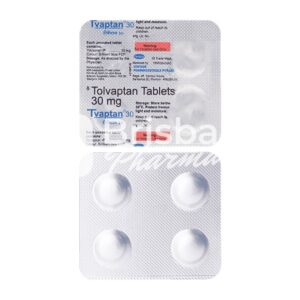
- Form of administration: oral tablet (available in 15 mg, 30 mg, 45 mg and 60 mg strengths, depending on region).
- Onset time: aquaretic effects and changes in serum sodium are typically seen within 2–4 hours after dosing.
- Duration of action: effects can last up to about 24 hours (elimination half‑life is roughly 8–12 hours), dosing frequency varies by indication.
- Alcohol warning: avoid excessive alcohol while taking tolvaptan as it increases the risk of dehydration and sodium disturbances; best to limit or avoid alcohol.
- The most common side effect is increased thirst and urination; other frequent effects include dry mouth, nausea, diarrhoea and fatigue.
- Would you like to try tolvaptan without a prescription?
Basic Tolvaptan Information
- INN (International Nonproprietary Name): Tolvaptan.
- Brand Names Available In Australia: Samsca, Jinarc.
- ATC Code: C03XA01.
- Forms & Dosages: Oral tablets 15 mg, 30 mg, 45 mg, 60 mg; typical blister packs of 10–30 tablets.
- Manufacturers In Australia: Otsuka Australia (originator); Accord Healthcare noted in regional supply.
- Registration Status In Australia: TGA registered.
- OTC / Rx Classification: Prescription-only (Rx).
Critical Warnings And Restrictions (Australian Context)
High-Risk Groups (Elderly, Pregnancy, Chronic Illness)
Tolvaptan is a prescription-only medicine that carries serious hepatic risk and must not be used in patients with significant liver impairment.
Absolute contraindications include severe liver disease, hypovolaemia, anuria and hypersensitivity to tolvaptan or excipients.
Use extreme caution in the elderly, people with chronic kidney disease and patients at risk of dehydration.
Women of childbearing potential should avoid pregnancy while taking tolvaptan and must use effective contraception during treatment.
Tolvaptan is not approved for use in children.
- Absolute Contraindications: Severe liver impairment; hypovolaemia; anuria; known hypersensitivity to tolvaptan or excipients.
- Relative Contraindications / Precautions: Moderate hepatic impairment; moderate to severe renal impairment; risk factors for dehydration; concomitant strong CYP3A4 inhibitors.
Start at lower doses in older patients and in those with comorbidities, and titrate cautiously under specialist supervision.
- Monitoring Checklist: Baseline liver function tests prior to starting.
- Monitoring Checklist: Regular liver function tests at specified intervals during treatment and after dose changes.
- Monitoring Checklist: Frequent serum electrolytes, especially serum sodium, during initiation or titration.
- Monitoring Checklist: Ongoing fluid status and weight checks to detect hypovolaemia or dehydration.
Interaction With Activities (Driving, Workplace Safety Under Australian Law)
Common effects such as polyuria, thirst and fatigue may impair the ability to drive or perform safety-critical work.
Patients should not operate heavy machinery or drive until they know how tolvaptan affects them.
Employers and licence holders should follow relevant workplace health and road rules in Australia when assessing fitness for duty.
Can I Drive After Taking It In Australia?
If you feel dizziness, excessive thirst, polyuria or fatigue after starting or after a dose change, do not drive.
Discuss any concerns about driving with your prescriber or pharmacist before returning to safety-sensitive tasks.
Usage Basics
INN, Brand Names Available In Australia
INN: Tolvaptan.
ATC Code: C03XA01.
Common brands available in Australia include Samsca and Jinarc supplied by Otsuka Australia.
Tablet strengths commonly distributed internationally and present in local supply lists include 15 mg, 30 mg, 45 mg and 60 mg tablets.
Legal Classification (TGA-Approved, PBS-Listed)
Tolvaptan is registered by the TGA and is prescription-only in Australia.
PBS subsidy and listing status may vary by indication, and PBS restrictions commonly apply for specialised uses such as ADPKD.
Check the current PBS schedule or consult a specialist for authority prescription requirements for subsidised access.
| TGA Registration | PBS Subsidy | Required Authority Forms |
|---|---|---|
| TGA Registered | Varies By Indication (often Restricted For ADPKD) | May Require Authority For PBS-Subsidised ADPKD Prescriptions |
Community pharmacies such as Chemist Warehouse, Priceline and TerryWhite Chemmart dispense tolvaptan on prescription, and rural patients may need local dispensing arrangements or telehealth e‑prescriptions.
Dosing Guide
Standard Regimens (PBS Reference Dosing)
For autosomal dominant polycystic kidney disease (ADPKD) specialist initiation commonly starts at 45 mg in the morning plus 15 mg in the afternoon with stepwise titration up to 90/30 mg as tolerated.
For hyponatraemia due to SIADH, congestive heart failure or cirrhosis, a typical start is 15 mg once daily with titration up to a maximum of 60 mg per day if needed.
Duration differs by indication; ADPKD is chronic therapy under specialist oversight, while hyponatraemia treatment is generally short-term with frequent sodium monitoring.
| Indication | Starting Dose | Titration Steps | Monitoring Intervals |
|---|---|---|---|
| ADPKD | 45 mg morning + 15 mg afternoon | Titrate to 60/30 mg, then 90/30 mg as tolerated | Baseline LFTs then periodic LFTs; renal function regularly |
| Hyponatraemia (SIADH/CHF/Cirrhosis) | 15 mg once daily | Increase stepwise to 30 mg then 60 mg if needed | Serum sodium daily during initiation until stable |
Adjustments For Comorbidities
Start at lower doses in elderly patients and monitor closely for dehydration and sodium shifts.
Tolvaptan is contraindicated in severe hepatic impairment and should be used with caution in moderate hepatic disease.
Use caution and specialist input in moderate renal impairment and avoid in severe renal failure unless advised by a nephrologist.
- Baseline liver function tests before initiation.
- Frequent LFTs during the first months and after dose escalations.
- Daily serum sodium checks during hyponatraemia treatment initiation.
- Regular review of fluid status and weight.
What If I Miss A Dose?
If you remember the missed dose on the same day, take it as soon as possible.
If it is near the time for your next dose, skip the missed dose and take the next scheduled dose.
Do not double up doses to make up for a missed dose and contact your prescriber if several doses are missed.
Interaction Chart
Food And Drinks (Alcohol, Coffee, Australian Diet Context)
Alcohol increases the risk of dehydration and can add stress to the liver while taking tolvaptan.
Caffeine may increase urine output but is less clinically significant than the aquaretic effect of tolvaptan.
Patients should follow fluid guidance given by their prescriber and avoid deliberate fluid overload or unusual fluid restriction unless directed.
- Avoid excessive alcohol while taking tolvaptan.
- Moderate caffeine intake is acceptable but monitor diuresis and nighttime urination.
- Avoid high-heat or prolonged exertion without planning for fluid replacement, particularly in summer.
Common Drug Conflicts
Tolvaptan is metabolised by CYP3A4 and exposure increases with strong CYP3A4 inhibitors such as certain azole antifungals and macrolide antibiotics.
Drugs that affect sodium or fluid balance such as digoxin, loop diuretics or lithium require monitoring when co‑used with tolvaptan.
| Medicine | Interaction Risk | Practical Advice |
|---|---|---|
| Ketoconazole (azole antifungal) | Strong CYP3A4 inhibitor — increases tolvaptan levels | Avoid concomitant use where possible; seek specialist advice |
| Clarithromycin (macrolide) | Strong/moderate CYP3A4 inhibitor | Prefer alternative antibiotic; monitor for toxicity |
| Digoxin | Fluid and electrolyte shifts can affect digoxin levels | Monitor serum levels and electrolytes |
| Loop Diuretics | Combined diuresis may increase dehydration risk | Monitor fluid status and electrolytes closely |
- Disclose all prescription medicines to your prescriber, including anticoagulants and cardiac meds.
- Tell your prescriber about OTC medicines, herbal products and supplements such as St John’s wort.
User Reports And Trends (Australian Experience)
Patient feedback on public review sites and forums often highlights increased thirst and frequent urination as the most bothersome effects of tolvaptan.
Some people report sleep disruption from nocturia when starting therapy, while others adapt after dose timing is adjusted.
ADPKD patients who remain on therapy under specialist care report slowed kidney volume progression in clinical practice summaries when treatment is sustained and tolerated.
Access barriers reported by Australian patients include PBS restrictions, authority paperwork and higher out-of-pocket costs when not subsidised.
- Positive Reports: Perceived slowing of cyst growth in some ADPKD patients; effective sodium correction for refractory hyponatraemia.
- Common Complaints: Thirst, polyuria, fatigue, monitoring burden (frequent blood tests).
- Access Barriers: Cost sensitivity, authority prescriptions for PBS, rural supply logistics.
| Sentiment | Common Frequency |
|---|---|
| Positive | Moderate (ADPKD disease-modifying reports) |
| Neutral | Occasional (well-managed adverse effects with counselling) |
| Negative | Frequent (thirst, polyuria, monitoring burden, cost) |
Access And Purchase Options (Australia)
National Chains And Community Pharmacies
Tolvaptan is dispensed by community pharmacies including Chemist Warehouse, Priceline and TerryWhite Chemmart as well as hospital pharmacies, on presentation of a valid prescription.
Authority prescriptions are commonly required for PBS-subsidised ADPKD indications and specialist services often assist with paperwork.
- Bring a current prescription when collecting tolvaptan from a pharmacy.
- Pharmacists provide counselling on monitoring, dosing and storage.
- Rural patients may need liaising with local hospitals or private suppliers for ongoing supply.
Online Pharmacies And Telehealth E-Prescriptions
E‑prescriptions issued via telehealth are accepted by accredited online pharmacies for dispensing of tolvaptan where local regulations are met.
Many accredited online pharmacies dispatch tolvaptan upon receipt of a valid prescription and confirm PBS or private-supply arrangements before postage.
In our online pharmacy, tolvaptan is available without a prescription, with discreet delivery to Australia in 9-21 days.
| Dispensing Type | Typical Wait Time | PBS Subsidy | Counselling Availability |
|---|---|---|---|
| In-Store Pharmacy | Same Day–3 Days | Yes, If Authority Approved | Face-to-Face Counselling |
| Online Pharmacy | 3–14 Days (Rural May Take Longer) | Varies; confirm before purchase | Telephone Or Online Counselling |
| Hospital Dispensing | Same Day–7 Days | Often Facilitated For Inpatients | Specialist Counselling |
- What To Bring To The Pharmacy: Prescription, photo ID and current list of medicines and allergies.
- Confirm storage requirements and monitoring dates when collecting the medicine.
Mechanism And Pharmacology
Simplified Explanation
Tolvaptan is a selective vasopressin V2 receptor antagonist that blocks vasopressin action in the renal collecting ducts.
By blocking V2 receptors tolvaptan causes aquaresis, which is excretion of free water without major electrolyte loss.
In hyponatraemia aquaresis raises serum sodium by removing excess water.
In ADPKD tolvaptan reduces cyclic AMP signalling in renal tubular cells and slows cyst growth and kidney volume progression.
- Aquaresis: Increased excretion of free water leading to higher serum sodium.
- V2 Receptor: Kidney receptor targeted by tolvaptan to reduce water reabsorption.
- cAMP: Intracellular messenger linked to cyst growth in ADPKD that tolvaptan modulates.
Clinical Terms
The aquaretic effect usually begins within hours of the first dose and sodium must be monitored to avoid overly rapid correction.
Pharmacokinetics are influenced by CYP3A4 metabolism, making drug interactions clinically important.
| Target Receptor | Physiological Effect | Clinical Outcome |
|---|---|---|
| V2 Receptor | Reduced water reabsorption in collecting ducts | Aquaresis; correction of hyponatraemia |
| cAMP Pathway | Lowered cAMP in renal tubular cells | Slower cyst growth in ADPKD |
Indications And Off-Label Uses
Approved Indications By TGA
Tolvaptan is approved for the treatment of clinically significant hyponatraemia due to conditions such as SIADH, congestive heart failure or cirrhosis when fluid restriction has not worked.
Tolvaptan is also approved for slowing the progression of autosomal dominant polycystic kidney disease in suitable adults.
Duration of therapy differs by indication and is specialist-directed; hyponatraemia treatment is usually short-term while ADPKD treatment is chronic when tolerated.
| Indication | Typical Dosing | Duration | Monitoring Needs |
|---|---|---|---|
| Hyponatraemia (SIADH/CHF/Cirrhosis) | Start 15 mg once daily, titrate to 60 mg | Usually Days–Weeks | Frequent serum sodium checks; LFTs |
| ADPKD | 45 mg morning + 15 mg afternoon, titrate as tolerated | Long-term (Specialist Management) | Regular LFTs, renal function monitoring |
Off-Label Uses In Australian Clinical Practice
Off-label prescribing of tolvaptan is uncommon and usually specialist-led if considered.
Compassionate or investigational use may occur in select settings, with documented informed consent and enhanced monitoring.
- Document informed consent clearly when prescribing off‑label.
- Provide additional monitoring and safety checks for off‑label use.
Key Clinical Findings (2022–2026 Focus)
Recent trials and registry data continue to support that tolvaptan slows eGFR decline and reduces total kidney volume growth in ADPKD for patients who can tolerate therapy.
Consistent safety signals highlight the risk of liver injury and the need for liver function monitoring.
For hyponatraemia, tolvaptan effectively increases serum sodium but requires careful monitoring to avoid overly rapid correction.
- Slowed eGFR slope in treated ADPKD cohorts compared with placebo in pivotal studies.
- Reduction in total kidney volume (TKV) growth observed with tolvaptan in ADPKD trials.
- Hepatic adverse events remain the principal safety concern requiring routine LFT monitoring.
- Rapid sodium correction is avoidable with daily monitoring during initiation in hyponatraemia.
| Study/Registry | Population | Key Results | Safety Signals |
|---|---|---|---|
| Pivotal ADPKD Trials | Adults With Progressive ADPKD | Slower TKV growth and slower eGFR decline vs placebo | Increased LFT abnormalities in a minority |
| Hyponatraemia Studies | Adults With SIADH/CHF/Cirrhosis | Effective serum sodium correction when monitored | Need to guard against over-rapid correction |
Alternatives Matrix
PBS-Listed Alternatives Comparison Table
| Alternative | Indication | Mechanism | PBS Status | Pros / Cons |
|---|---|---|---|---|
| Fluid Restriction | Hyponatraemia | Reduces free water intake | Not A Medicine | Low Cost; Often Ineffective In Severe Cases |
| Hypertonic Saline | Severe Hyponatraemia (Hospital) | Raises Serum Sodium Quickly | Hospital Use | Rapid Correction Risk; Requires Inpatient Monitoring |
| Demeclocycline | Chronic SIADH (Limited Use) | Induces Nephrogenic DI | Limited PBS Use | Nephrotoxicity Risk; Variable Efficacy |
| Supportive Care (BP Control) | ADPKD | Blood Pressure Management | PBS Depends On Med | Important For Slowing CKD; Not Disease-Modifying Like Tolvaptan |
Pros And Cons Checklist
- Pros: Disease-modifying for ADPKD in eligible patients; effective rapid correction of sodium in refractory hyponatraemia.
- Cons: Risk of liver injury; bothersome thirst and polyuria; interaction profile via CYP3A4; monitoring burden and cost/PBS eligibility concerns.
- Decision Checklist: Assess indication severity, monitoring capacity, liver risk, PBS eligibility and patient preference before starting.
Common Questions (Pharmacy Consultations)
Why Am I Thirsty?
Thirst is expected because tolvaptan increases free water excretion (aquaresis) and patients commonly perceive increased thirst as the body seeks to maintain fluid balance.
How Often Are Blood Tests Needed?
Obtain baseline liver function tests before starting and repeat at recommended intervals during early therapy and after dose increases.
Can I Drink More Water?
Follow the prescriber’s fluid advice; do not deliberately overload fluids or restrict beyond instructions without speaking to the prescriber.
Will It Affect My Other Meds?
Yes; check with your pharmacist about CYP3A4 interactions and medicines that affect sodium and fluid balance.
- When To Call The Prescriber Or Pharmacy: Signs of liver injury such as jaundice, dark urine, persistent nausea or vomiting.
- When To Call: Rapid changes in sodium symptoms such as confusion, seizures, or marked weakness.
- When To Call: Severe dehydration symptoms like fainting, very low urine output or dizziness on standing.
Pharmacists should document counselling and provide written monitoring schedules to patients starting tolvaptan.
Price And Access Comparison Table
| Pharmacy / Source | Typical Price Range | PBS Subsidy | Prescription Required |
|---|---|---|---|
| Chemist Warehouse | Varies By Brand And Pack Size | Yes, If Authority Approved | Yes |
| Priceline | Varies By Brand And Pack Size | Yes, If Authority Approved | Yes |
| TerryWhite Chemmart | Varies By Brand And Pack Size | Yes, If Authority Approved | Yes |
| Hospital Pharmacy | Often Subsidised For Inpatients | Often Facilitated | Yes |
| Accredited Online Pharmacy | Varies; Delivery Fees May Apply | Varies | Yes |
Access Checklist — Major Chains, Online Pharmacies, Rural Versus Urban Availability
- Confirm if PBS authority approval is required for your indication before ordering.
- Bring recent pathology results if the pharmacy requests them to verify monitoring.
- Arrange repeat prescriptions or specialist follow-up to ensure continuous supply.
- Plan for liver monitoring dates and confirm local pathology availability for rural patients.
- Contact Resources: TGA, PBS helpline and local state renal clinics for assistance with subsidy queries.
Registration And Regulation
TGA Approval
Tolvaptan is TGA-registered in Australia and marketed under brand names such as Jinarc and Samsca by Otsuka Australia and distribution partners.
- Prescription-only status applies.
- Adverse events should be reported to the TGA via the Database of Adverse Event Notifications (DAEN).
- Sponsors provide safety updates and may issue prescribing restrictions or additional monitoring guidance.
PBS Subsidy Details
PBS subsidy for tolvaptan is often restricted and may require authority approval, particularly for ADPKD indications.
- Check the current PBS schedule for listing specifics, criteria and required authority forms.
- State renal units and specialist clinics can help with applications and appeals for PBS access.
Storage And Handling
Household Storage In Australian Climate (Heat/Humidity)
Store tolvaptan below 25°C in its original container and protect from moisture.
Avoid leaving tablets in parked cars or in direct sunlight during hot Australian summers.
Keep all medicines out of reach of children and pets.
- If tablets are exposed to excessive heat, contact the dispensing pharmacy for advice and possible replacement.
- Do not use tablets past their expiry date and return unused medication to a pharmacy for disposal.
Cold-Chain Handling For Pharmacies
No cold-chain is required for tolvaptan, but pharmacies should store stock per label instructions and avoid excessive humidity.
- Maintain temperature logs and perform regular stock rotation.
- Record batch numbers and expiry dates at dispensing.
- Provide the patient with the manufacturer’s patient information leaflet and a monitoring schedule when dispensing.
Guidelines For Proper Use (Pharmacist Counselling Style)
Australian Pharmacist Counselling Points
Explain that tolvaptan works by promoting excretion of free water and that common effects include thirst and increased urination.
Advise baseline and ongoing liver tests and explain the symptoms of liver injury such as yellowing of skin or eyes and dark urine.
Discuss the importance of frequent sodium checks during initiation, and the need to seek urgent care for severe symptoms suggestive of rapid sodium change.
Cover driving and workplace safety and provide interaction checks for CYP3A4 inhibitors.
- Provide a written action plan with dosing schedule and monitoring dates.
- Ensure the patient has contact numbers for their specialist, GP and pharmacy.
Sample Patient Handout Template: Medicine name and strength, dosing schedule, next monitoring dates, warning signs, emergency contact numbers.
Patient Advice From PBS And National Health Authorities
Reinforce that PBS criteria must be met for subsidy and direct patients to official resources for up-to-date subsidy information.
Encourage reporting adverse events to the TGA and using local pathology and telehealth services for rural monitoring needs.
- Monitoring Terms: LFTs (liver function tests), eGFR (estimated glomerular filtration rate), serum sodium.
- Contact Prescriber Or Pharmacist If: Jaundice, severe nausea, fainting, confusion, or reduced urine output.
Delivery Across Australia
| City | Region | Delivery Time |
|---|---|---|
| Sydney | New South Wales | 9-14 days |
| Melbourne | Victoria | 9-14 days |
| Brisbane | Queensland | 9-14 days |
| Perth | Western Australia | 9-14 days |
| Adelaide | South Australia | 9-14 days |
| Hobart | Tasmania | 9-14 days |
| Darwin | Northern Territory | 14-21 days |
| Canberra | Australian Capital Territory | 9-14 days |
| Gold Coast | Queensland | 9-14 days |
| Newcastle | New South Wales | 9-14 days |
| Wollongong | New South Wales | 9-14 days |
| Geelong | Victoria | 9-14 days |
| Cairns | Queensland | 14-21 days |
| Townsville | Queensland | 14-21 days |