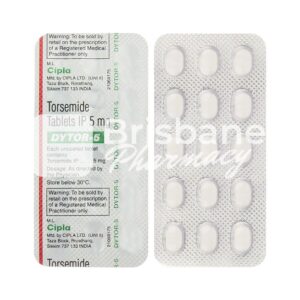
Furosemide
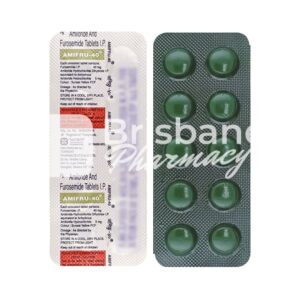
In brief
- In our pharmacy, furosemide can be purchased without a prescription, with delivery available throughout Australia in discreet packaging.
- Furosemide is a loop diuretic used to treat fluid retention (oedema) due to heart failure, liver disease, or kidney disease, and it may also be used for hypertension and acute pulmonary oedema. It works by blocking sodium and chloride reabsorption in the loop of Henle, causing the kidneys to remove excess salt and water from the body.
- The usual dose of furosemide for adults is 20–80 mg by mouth once or twice daily for oedema, 20–40 mg twice daily for hypertension, and 20–40 mg intravenously for acute pulmonary oedema; doses are adjusted according to response and medical condition.
- The form of administration is tablets, film-coated tablets, oral solution, injection ampoules, solution for injection, and vials.
- The effect of furosemide usually begins within about 30–60 minutes when taken orally, and within 5 minutes when given intravenously.
- The duration of action is usually about 6 hours, though it may vary depending on the dose and route of administration.
- Alcohol should be avoided, as it can increase dizziness, low blood pressure, and dehydration.
- The most common side effects are increased urination, thirst, dizziness, low blood pressure, and electrolyte imbalances such as low potassium or low sodium.
- Would you like to try furosemide without a prescription?
Basic Furosemide Information
- INN (International Nonproprietary Name): Furosemide.
- Brand names available in Australia: Frusemide; Lasix is a well-known global brand, and Australian pharmacies may stock various generic furosemide tablets.
- ATC Code: C03CA01.
- Forms & dosages: Tablets 20 mg, 25 mg, 40 mg, 250 mg; film-coated tablets 40 mg; injection ampoules 20 mg/2 ml, 40 mg/4 ml; solution for injection 20 mg/2 ml, 50 mg/5 ml; oral solution 40 mg/4 ml, 40 mg/5 ml; vials 20 mg/2 ml.
- Manufacturers in Australia: not specified.
- Registration status in Australia: TGA-regulated; generally prescription-only.
- OTC / Rx classification: Prescription (Rx) medication in almost all jurisdictions.
Why Furosemide Needs Careful Use In Australia
Who Needs Extra Caution
Elderly patients often need the lowest effective dose because dehydration and electrolyte shifts can happen quickly.
Extra caution is also needed in people with kidney disease, liver disease, gout, diabetes, dehydration, low blood pressure, anuria, or severe electrolyte depletion.
Furosemide, also called frusemide in Australia and the UK, is prescription-only and can cause dangerous fluid loss, hypokalaemia, hyponatraemia, and hypotension.
Warning: Confusion, fainting, severe weakness, palpitations, reduced urine, hearing changes, and severe vomiting or diarrhoea need prompt medical review.
Pregnancy, Breastfeeding, And Driving Safety
Use in pregnancy and breastfeeding needs medical review, because the risk and benefit must be weighed carefully for each patient.
Driving, machinery work, and long shifts can become unsafe if dizziness, dehydration, or postural hypotension sets in.
That matters even more for remote work or long regional drives, where fluid intake, access to toilets, and quick medical help can be limited.
Micro-FAQ — Can I Drive After Taking It In Australia?
Only drive if you feel fully alert and not dizzy.
If you are light-headed, thirsty, faint, or unsteady, do not drive.
Use public transport or a rideshare instead, and check this symptom checklist first:
- Any dizziness or blurred concentration.
- Any fainting or near-fainting.
- Any severe weakness or muscle cramps.
- Any unusual palpitations.
- Any urgent need to toilet plus reduced fluid intake.
What Furosemide Is And What It’s Called In Australia
Inn, Local Name, And Common Brands
Furosemide is a loop diuretic, which means it helps the body remove extra salt and water through the kidneys.
The Australian spelling frusemide is commonly used, and patients may hear both names in the same consultation.
Lasix is the best-known global brand, while Australian patients will often ask for frusemide tablets from a generic brand.
Legal Classification And Prescribing
In Australia, furosemide is TGA-regulated and usually supplied only with a prescription from a GP, hospital, or telehealth consult.
Patients also often ask about brand substitution and PBS eligibility, especially when the medicine is being used long term.
- INN
- Furosemide
- Local Australian spelling
- Frusemide
- ATC code
- C03CA01
- Rx status
- Prescription-only
How Furosemide Works In The Body
Simplified Mechanism
Furosemide blocks salt reabsorption in the loop of Henle, which helps the kidneys pass more salt and water into the urine.
That action can reduce swelling, ease fluid overload, and lower blood pressure in patients for whom it is clinically appropriate.
The effect can be fast, which is why fluid status, blood pressure, and electrolytes need regular monitoring.
Clinical Terms Patients May Hear
| Plain English | Medical Term |
|---|---|
| Passing more urine | Diuresis |
| Swelling from extra fluid | Oedema |
| Swelling that does not settle easily | Resistant oedema |
| Fluid on the lungs causing breathlessness | Acute pulmonary oedema |
When a patient says, “My legs are puffy and my shoes no longer fit,” a doctor may be thinking about fluid overload rather than simple weight gain.
Approved Uses And When Doctors Prescribe It
Main Indications
Doctors commonly prescribe furosemide for oedema linked to heart failure, kidney disease, or liver disease.
It may also be used for hypertension where the prescriber thinks a loop diuretic is clinically suitable.
In hospital, it is an established treatment for acute pulmonary oedema, where rapid diuresis may help relieve breathlessness.
What Australian Patients Should Expect
Treatment may be short term for a flare-up, or ongoing for chronic conditions such as heart failure or cirrhosis.
Prescribers usually adjust the dose by symptoms, weight change, urine output, kidney function, and blood tests.
- Oedema from heart, kidney, or liver disease.
- Hypertension in selected patients.
- Acute pulmonary oedema in urgent hospital care.
Micro-FAQ — Is Furosemide Used For Bloating?
It may be used for fluid retention, but not for ordinary diet-related bloating unless a clinician has diagnosed fluid overload.
It is not a casual self-treatment for a heavy meal, and it should not be used that way.
Dosing Basics For Adults And Children
Standard Adult Dosing
For oedema, adults are commonly started on 20 to 80 mg orally once or twice daily, with the dose titrated as needed.
For hypertension, the usual adult dose is 20 to 40 mg twice daily.
For acute pulmonary oedema, the usual intravenous dose is 20 to 40 mg, repeated if needed under supervision.
Higher doses can be used in resistant cases, particularly where renal impairment is present, but only with monitoring.
Paediatric And Older Adult Dosing
Children with oedema may be given 1 to 2 mg/kg/dose, up to 6 mg/kg/day, either orally or by injection when needed.
Older adults should start at the lowest possible dose because they are more prone to dehydration and electrolyte imbalance.
Monitoring And Dose Changes
| Group | Starting Approach | Key Caution |
|---|---|---|
| Adults with oedema | 20 to 80 mg orally once or twice daily | Watch fluid loss and blood pressure |
| Adults with hypertension | 20 to 40 mg twice daily | Monitor response and electrolytes |
| Children | 1 to 2 mg/kg/dose | Individual titration is essential |
| Older adults | Lowest effective dose | Higher dehydration risk |
Caution: Weight, blood pressure, kidney function, and electrolytes should be checked when the medicine is started or adjusted.
Missed Doses, Overdoses, And Urgent Action
Missed Dose Guidance
Take a missed dose as soon as you remember, unless it is close to the next dose.
Never double up to make up for a missed tablet.
Overdose Warning Signs
Too much furosemide can cause profound diuresis, dehydration, hypotension, hypovolaemia, and electrolyte imbalance.
That needs urgent medical attention and supportive care.
In Australia, call 000 for severe symptoms or the Poisons Information Centre on 13 11 26 for advice.
Micro-FAQ — What If I Miss A Dose?
If it is late in the day, skipping may be safer than taking it and being up all night urinating.
Check with your pharmacist or prescriber if you are unsure about the timing.
- Severe thirst.
- Marked dizziness or fainting.
- Very low urine output after overdose.
- Confusion or extreme weakness.
- Palpitations or an irregular heartbeat.
Side Effects Australians Should Watch For
Common Effects
Common effects include increased urination, thirst, dizziness, headache, muscle cramps, weakness, and postural hypotension.
Electrolyte problems such as hypokalaemia, hyponatraemia, and hypomagnesaemia can also occur.
Less Common But Important Effects
Some people may experience gastrointestinal upset, rash, photosensitivity, or a temporary rise in creatinine or urea.
High intravenous doses can rarely cause hearing-related problems, especially in people with renal impairment.
Seek help now: Fainting, palpitations, severe weakness, or hearing changes should be treated as urgent warning signs.
- Common: increased urine, thirst, dizziness, cramps, weakness.
- Urgent: fainting, palpitations, severe weakness, hearing changes, or severe dehydration.
Contraindications And Drug Interactions
Absolute Contraindications
Furosemide should not be used in anuria, known hypersensitivity to furosemide or sulfonamides, severe electrolyte depletion, or hepatic coma or pre-coma.
Common Cautions
Extra care is needed in diabetes, gout, dehydration, hypotension, urinary retention or prostatic enlargement, renal impairment, and liver disease.
Severe hepatic impairment also needs close supervision because encephalopathy can be precipitated.
Interaction Chart
| Medicine or Substance | Why It Matters | Action |
|---|---|---|
| NSAIDs | May reduce effect and affect kidney function | Check before using pain relief |
| Aminoglycosides | Can increase hearing and kidney risk | Needs close medical supervision |
| Other antihypertensives | Blood pressure may drop too low | Monitor for dizziness and fainting |
| Alcohol | Can worsen dizziness and dehydration | Avoid or keep intake minimal |
Australian pharmacists often check over-the-counter pain relief, cold and flu products, and supplements for hidden interaction problems.
Food, Drinks, And Everyday Australian Habits
Meals, Alcohol, And Caffeine
Salt-heavy meals can work against fluid management plans, especially in patients with heart failure or cirrhosis.
Alcohol may increase dizziness and dehydration, while moderate caffeine may be tolerated but can add to bathroom urgency.
Practical Lifestyle Advice
Hot weather, outdoor work, sport, and long drives across regional Australia can all make dehydration more likely.
Where appropriate, taking the dose earlier in the day can reduce night-time bathroom trips.
- Keep an eye on fluid intake in hot weather.
- Ask about your target daily fluid intake if you are on a fluid restriction.
- Plan toilet access before long drives or shifts.
- Follow your clinician’s advice on timing and salt intake.
Access In Australia: Pharmacies, Telehealth, And Rural Differences
Where Patients Get It
Furosemide is commonly supplied through major pharmacy chains such as Chemist Warehouse, Priceline, and TerryWhite Chemmart.
It is also supplied by smaller community pharmacies, hospital pharmacies, and online pharmacies with a valid prescription.
In our online pharmacy, furosemide is available without a prescription, with discreet delivery to Australia in 9-21 days.
E-Prescriptions And Telehealth
Many Australians now receive an e-prescription after a GP or telehealth consult, which can make repeat supply simpler.
Rural and remote patients may rely more on mail delivery or local pharmacy ordering, especially where the nearest pharmacist is a long drive away.
PBS And Price Sensitivity
People often ask whether furosemide is PBS-listed and what the out-of-pocket cost will be.
Price can vary by brand, pack size, and concession status, so a pharmacist can usually explain the difference before supply.
| Access Channel | Convenience |
|---|---|
| Community pharmacy | Fast local supply when stock is available |
| Hospital pharmacy | Often used after discharge or urgent care |
| Online pharmacy | Useful for people who cannot easily travel |
| Mail delivery | Helpful for remote and regional patients |
Tga, Pbs, And Prescription Rules
Regulatory Status
Furosemide is TGA-approved and commonly used under Australian prescribing rules.
It remains an Rx-only medicine, so a valid prescription is normally required.
Pbs Subsidy Basics
PBS subsidy depends on indication, prescriber category, and patient entitlement.
Patients often rely on pharmacists to explain whether the concessional or general co-payment will apply.
- TGA
- Therapeutic Goods Administration
- PBS
- Pharmaceutical Benefits Scheme
- Rx-only
- Prescription-only supply
- Subsidy
- Government support that may reduce the patient cost
Hospital supply can differ from community supply, especially after discharge.
Storage, Transport, And Australian Climate Issues
Home Storage
Store furosemide at 15 to 25 °C and protect tablets and vials from light and moisture.
Do not freeze injectables.
Keep medicines out of hot cars and steamy bathrooms, because Australian heat and humidity can damage them.
Travel And Rural Transport
When travelling, keep the original packaging and label with you, especially on flights or long regional trips.
Check expiry dates before leaving home, and keep the medicine in a cool, dry place during transport.
- Store at room temperature.
- Protect from light and moisture.
- Do not freeze injectable forms.
- Keep out of the car on hot days.
- Carry it in original packaging when travelling.
What The Evidence And Clinical Practice Suggest
Evidence Overview
Furosemide remains a standard loop diuretic in heart failure, oedema, and acute fluid overload management.
In practice, the focus is on symptom relief, decongestion, and safety monitoring rather than cure.
That is why doctors keep checking fluid balance and blood results instead of simply writing a script and forgetting about it.
Real-World Australian Practice Points
Clinicians often individualise dose based on response, kidney function, and the need to avoid excessive fluid loss.
Published studies and guideline updates continue to compare loop diuretics, including torasemide and bumetanide, but choice still depends on the patient and the clinical context.
| Benefit | Limitation | Monitoring Need |
|---|---|---|
| Reduces excess fluid | Can overdo fluid loss | Blood pressure and weight |
| Can ease breathlessness | Not a cure for the underlying disease | Kidney function and electrolytes |
| Useful in acute and chronic care | Effect varies between patients | Review response after dose changes |
Alternatives And Comparison With Other Loop Diuretics
Alternatives Matrix
Other loop diuretics include torasemide, bumetanide, and ethacrynic acid.
They may differ in potency, duration, or local supply, but the right choice depends on the patient’s condition and the prescriber’s preference.
| Medicine | Typical Use | Main Advantage | Key Caution | PBS / Supply Note |
|---|---|---|---|---|
| Furosemide | Oedema, hypertension, acute fluid overload | Well established and widely used | Dehydration and electrolyte loss | Commonly supplied in Australia |
| Torasemide | Alternative loop diuretic | May suit some patients | Still needs monitoring | Availability varies |
| Bumetanide | Alternative loop diuretic | Another option when response is inadequate | Fluid and electrolyte issues | Availability varies |
| Ethacrynic acid | Specialist use | May be considered in selected cases | Requires careful supervision | Specialist supply may differ |
- Ask if the switch is for tolerance, response, or supply.
- Confirm whether the new medicine changes your dose timing.
- Check if monitoring blood tests need to be repeated.
- Ask whether brand substitution is acceptable.
Patient Counselling, Frequently Asked Questions, And Safe Use Reminders
What Australian Pharmacists Usually Cover
Pharmacists usually talk about timing, bathroom planning, missed doses, monitoring, interactions, and red flags.
Long-term users should regularly check electrolytes and renal function.
That conversation is often short at the counter, but it can prevent a hospital trip later on.
Common Questions From Consultations
- Why am I urinating so much?
- Can I take it with blood pressure tablets?
- Do I need potassium?
- Can I change brand?
- How long will I need it?
Micro-FAQ — Do I Need Potassium Tablets With Furosemide?
Not always.
It depends on blood tests, diet, and the prescriber’s plan.
Some patients need extra potassium support, while others do not.
The final safety checklist is simple:
- Take exactly as prescribed.
- Monitor symptoms and blood tests.
- Seek help if swelling worsens.
- Seek help if breathlessness worsens.
- Seek help if dizziness becomes severe.
Delivery Across Australia
| City | Region | Delivery time |
|---|---|---|
| Sydney | New South Wales | 9-14 days |
| Melbourne | Victoria | 9-14 days |
| Brisbane | Queensland | 9-14 days |
| Perth | Western Australia | 9-14 days |
| Adelaide | South Australia | 9-14 days |
| Canberra | Australian Capital Territory | 9-14 days |
| Hobart | Tasmania | 9-14 days |
| Darwin | Northern Territory | 9-14 days |
| Gold Coast | Queensland | 9-14 days |
| Newcastle | New South Wales | 9-14 days |
| Wollongong | New South Wales | 9-14 days |
| Geelong | Victoria | 9-14 days |
| Townsville | Queensland | 14-21 days |
| Bendigo | Victoria | 14-21 days |